
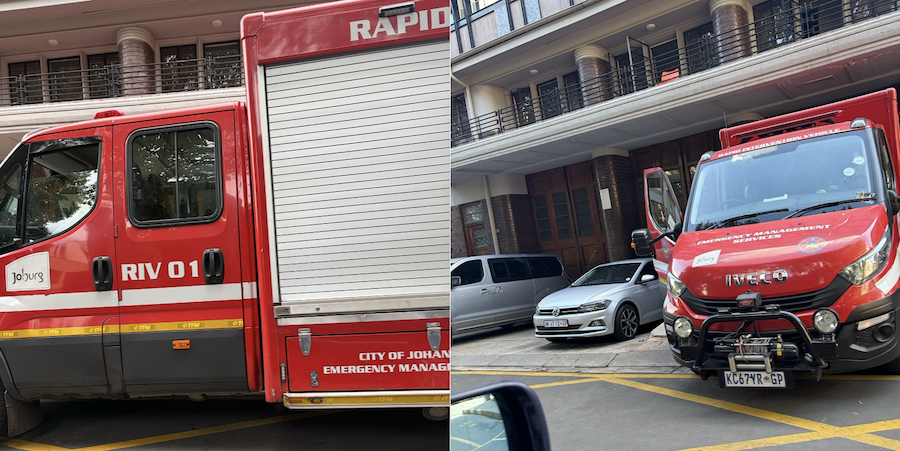
The phrase ‘the country is on fire’ is a historical echo of protest, but in Johannesburg, it has become devastatingly literal. The crisis within the municipal fire department is more than a story of broken trucks, it is a disasterclass in how a city fails its people. Rather than an explicit, malevolent policy against the poor, it embodies pervasive and systemic neglect where the most vulnerable citizens simply fall through the cracks of a fractured and distracted government.
The city’s disparate responses to disaster render this neglect starkly visible. If 400 suburban houses were to burn, it would rightly be declared a national emergency. Yet, when 400 shacks in an informal settlement are destroyed, the response is perversely banal. The disparity reveals the city’s working classes and residents of so-called ‘hijacked buildings’ – the very people upon whose labour the city thrives and who remain largely invisible to the state apparatus, their safety not a priority but an afterthought.
Johannesburg is caught in a polycrisis; a flickering conflagration where failures in governance, finance and service delivery feed into one another. At its heart is persistent political instability. The city’s fragile coalition governments, constantly negotiating for survival, have proven incapable of the sustained leadership and oversight necessary to manage complex systems.
Perpetual political manoeuvring creates an emptiness where accountability evaporates and long-term planning is sacrificed for short-term political gains. Johannesburg’s political landscape since the 2016 local government elections has been characterised by fragile and often dysfunctional coalition governments. The ANC’s first-time loss of an outright majority made the city a national poster child for coalition turbulence. Between 2016 and 2023, the city cycled through at least six mayors from various parties – including the DA, the ANC and Al Jama-ah – in often convenient and short-lived coalitions.
This complex and shifting landscape has profound governance consequences. In a relentless game of musical chairs, no single administration has had the time or mandate to implement long-term solutions. The constant threat of motions of no confidence forces coalition partners to prioritise short-term political survival over effective service delivery, leading to policy paralysis, vacillating priorities and little or no accountability for the city’s administration. Thus procurement failures and administrative neglect cripple services like the fire department, as a fragmented council cannot provide the consistent oversight needed to stem corruption and ensure competent governance.
Nowhere is this institutional collapse more apparent than in its catastrophic failure to procure or maintain adequate numbers of fire engines. This is not bad luck, but a direct consequence of systemic rot. For a metropolis of over six million people, the national standard calls for 70 fire engines. The reality, according to veteran fire chief Wynand Engelbrecht, is a shocking two or three.
The staggering deficit results from procurement systems that have been set ablaze. Over the last decade, the city has incinerated hundreds of millions of rands in botched deals, from the R178 million paid to Fire Raiders for undelivered vehicles to the R157 million paid to TFM Industries for only half an order of vehicles. In a move that perfectly encapsulates the farce, the city council voted to simply write off over R15 million from these failed deals as ‘fruitless and wasteful expenditure’. What looks like poor administration is also torching the public trust, where corruption and incompetence literally cost lives.
The human toll of this political and procurement failure is etched in ash. The 2023 Usindiso building inferno, which killed 71 people, was a catastrophe foretold. This tragedy, like the Bank of Lisbon building fire that killed three firefighters, was not a simple accident. It was the end point of a chain of failures, flouted safety inspections, vandalised infrastructure and a fire service so crippled by procurement paralysis and political neglect that it requires assistance from private companies to function. The building, a known death trap, was allowed to persist. The subsequent inquiry revealed a horror scene, compounded by a late-arriving politician whose attempt to break protocol temporarily set back rescue efforts: the perfect symbol of a political culture that prioritises grandstanding over governance.
The Usindiso crisis is the most inflammatory indicator of the city’s health. It connects everything; the corruption that bleeds the budget dry, the heated political dysfunction that paralyses civil servants, and the brittle collapse of cooperation between city departments. The gas explosion on Lillian Ngoyi Street in 2023, for example, was a direct result of tampering with city-owned infrastructure. The theft of copper cables and fire hydrants shows how the city’s ailments are interconnected, with one department’s failure becoming another’s emergency.
In the face of this governmental retreat, a surreal solution has emerged, namely a private market for firefighting. Companies now perform one of the most basic functions of a modern state, creating a two-tiered city where lifesaving protection is a luxury for those who can pay. The rise of this industry is Johannesburg’s ultimate indictment, underscoring the complete disintegration of the city’s governmental covenant.
The flames consuming Johannesburg are burning what remains of a functioning social contract. The question, therefore, is no longer just how to buy more fire trucks. It is a more profound challenge to reassemble a stable political coalition capable of governing and rebuilding procurement systems, which also values every life equally. It would look like competence replacing corruption and reliability replacing ruin. The public would see a fire brigade arriving on time, with well-maintained equipment and a clear mandate to serve all communities. Until the city’s leadership can forge such a consensus, all grand plans for renewal will remain kindling, waiting for the next spark.
