
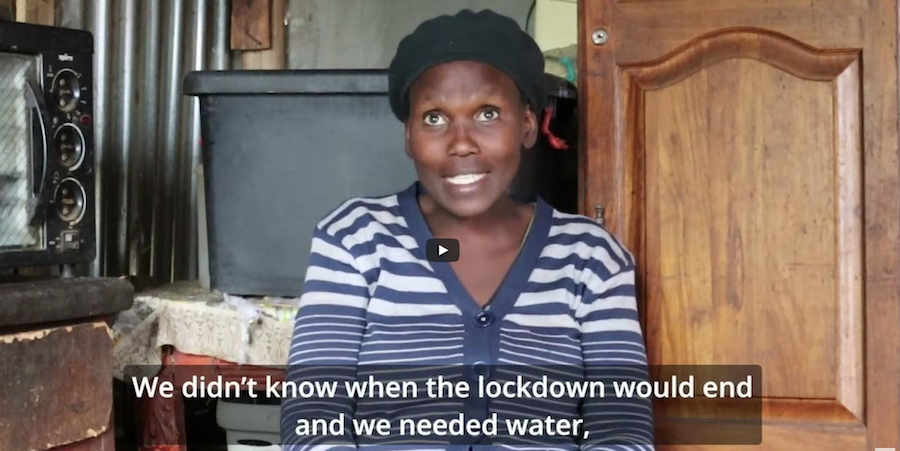
Research videos by Mahlatse Rampedi and Ntokozo Ndhlovu
This six-part documentary series examines chronic water insecurity in Mountain City and Phumla Mqashi, two informal settlements in the City of Johannesburg, through an empirical focus on the ‘truck-and-tank’ system (Jojo tanks supplied by tanker deliveries). Drawing on residents’ accounts and sustained on-site observation, the series analyses how a nominally temporary service arrangement becomes institutionalised as a long-term modality of urban water provision. It documents the operational features of the system—unpredictable delivery schedules, insufficient volumes, and weak maintenance —and traces their consequences for daily practices of water acquisition, rationing, and household reproduction. The series further investigates downstream developmental effects, including constraints on hygiene and health, disruptions to Early Childhood Development (ECD) centres, and limitations on household food production and livelihood strategies. Particular attention is given to the political economy of coping: the accumulation of household-level infrastructure (containers, drums, private tanks) and the expansion of informal water markets that shift costs onto low-income residents, often increasing the unit price of water relative to formal tariff structures. By foregrounding community agency and resilience without recognition, the series contributes to debates on state capability, accountability, and rights-based service delivery, and advances a practical agenda for transparency and minimum service standards in tanker-based water provision.
01 Carrying the weight of water scarcity
This episode situates access to water as a foundational determinant of health, dignity and socioeconomic development, and examines how chronic scarcity reshapes everyday life in Johannesburg’s informal settlements.
02 Fragile Foundations
This episode examines the effects of chronic water insecurity on early childhood development (ECD) provision, demonstrating how interruptions in water supply directly constrain the functioning of childcare and early learning systems.
03 Parched Fields
Drawing on residents’ accounts, this episode examines efforts to cultivate vegetables as a strategy to offset rising food costs and strengthen household resilience and shows how the truck-and-tank system effectively forecloses such practices by rendering water availability irregular, insufficient and difficult to allocate to productive uses.
04 Empty Tanks
Household-level ‘self-provisioning’ strategies focus on the acquisition of private storage tanks as a coping response to unreliable tanker-based supply.But households’ investments in storage are frequently undermined by the absence of municipal refilling practices, thereby shifting residents toward private suppliers and informal water markets.
