
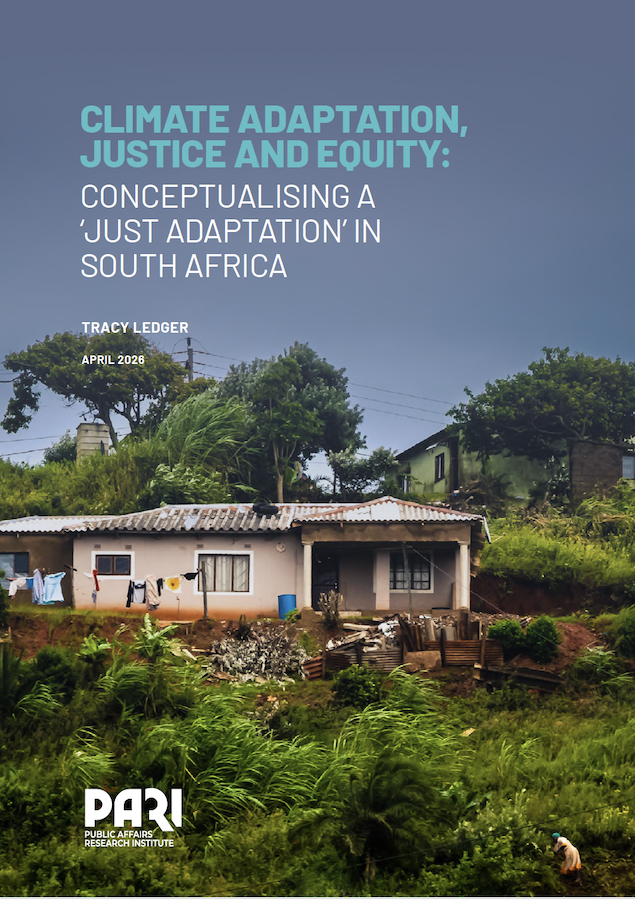
By Tracy Ledger
This research paper presents a detailed analysis of the linkages between climate change, poverty and development, and critically applies that analysis to South Africa’s current climate adaptation strategies. The report draws attention to the key issues most relevant to South Africa’s situation that have not been sufficiently considered in the country’s adaptation plans. In particular, the research presents an alternative framing of the concepts of resilience and vulnerability that is relevant to high-poverty-and-inequality contexts like South Africa. This alternative framing is used to expand the definition of maladaptation to specifically include the failure to reduce existing vulnerabilities to climate change. We further propose that the application of several key concepts that are common in the energy-justice literature (such as distributive justice and the notion of a systems transition) to climate adaptation can support policies with a significantly reduced risk of maladaptation.
This alternative framing indicates the necessity of expanding the scope of policies to ensure that adaptation will reduce vulnerability. It should be noted that our critical analysis has focused on South Africa, but similar findings would be made in respect of the adaptation strategies of other countries. That is, the shortcomings in South Africa’s policies reflect the general approach towards framing adaptation – both in country policies and across the adaptation literature – rather than any country specific failings.
